
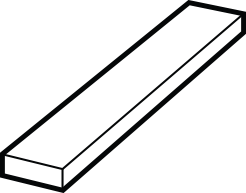
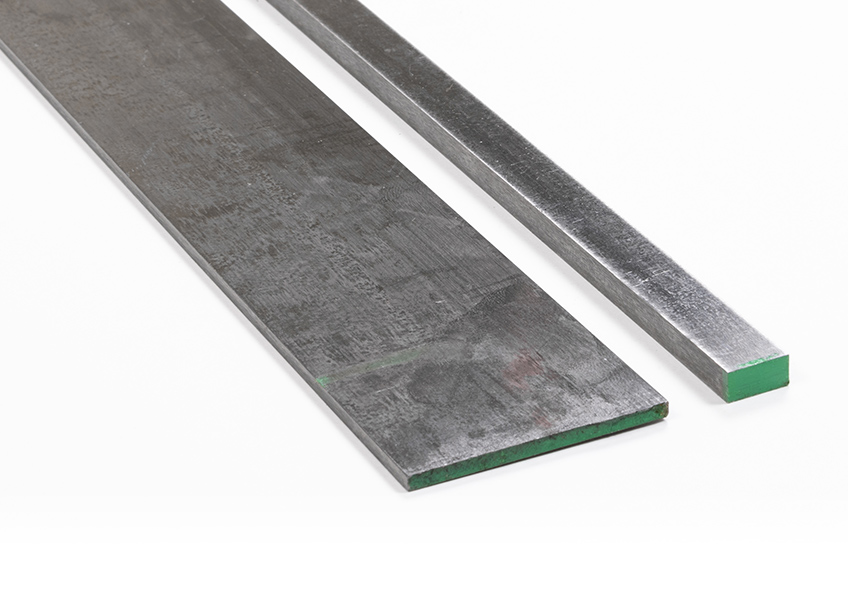
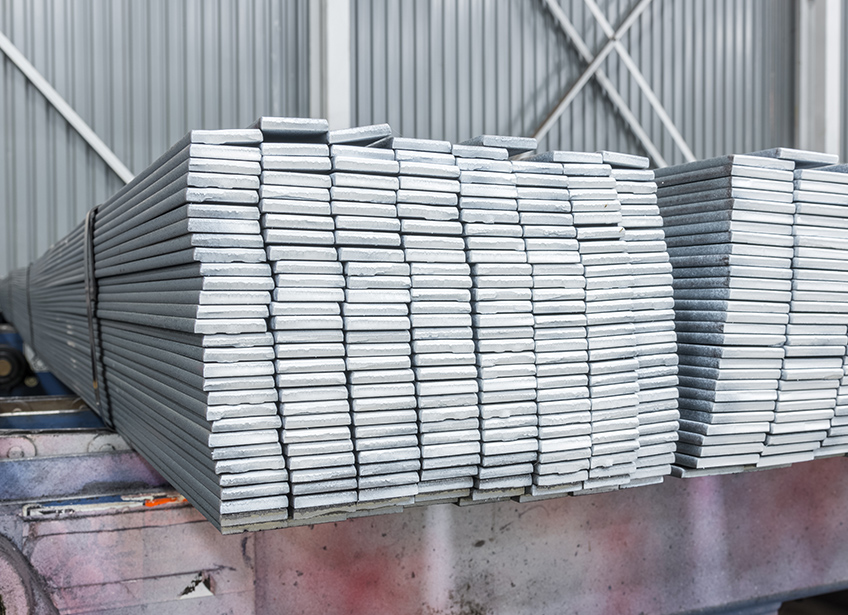
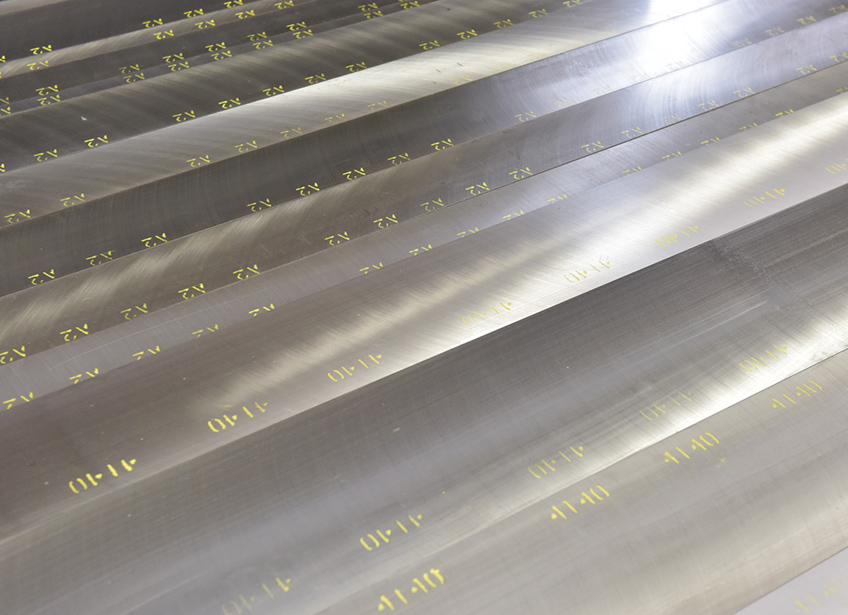
Flats are an extruded bar product that are very versatile and have a wide range of applications. Flat bar is widely used for all types of fabrication projects where lightweight and corrosion resistance is a concern.
| Grade | Description |
|---|---|
| 1018 | Mild (low carbon) steel, strong and ductile, has good weldability properties. |
| 1055 | Right on the border between a medium and a high carbon steel. |
| A36 | Low carbon steel that exhibits good strength coupled with formability. It is easy to machine and fabricate and can be securely welded. |
| M1044 | Medium carbon steel used in general purpose applications when special quality is not required. It has good overall properties somewhat higher than low-carbon mild steel. |
| Grade | Description |
|---|---|
| 360 | Wide range of applications. Highest rated among copper alloys. Fair soldering and brazing capabilities. |
| Grade | Description |
|---|---|
| 110 | Broad range of uses. Excellent hot and cold forming characteristics. Poor machinability rating. |
| Grade | Description |
|---|---|
| 954 | Most popular among bronze alloys. Provides high tensile and yield strength. Good ductility, weldability, and machinability. Excellent resistance to wear, fatigue, and deformation. |
| Grade | Description |
|---|---|
| 2024 | One of the most commonly used high strength aluminum alloys. Low corrosion resistance. Commonly used when good strength-to-weight ratio is desired. |
| 6042, 6061, 6063, 6082, 6101 | Heat treatable, structural alloy with medium strength and good weldability, formability, machinability, and relatively good corrosion resistance. |
| 7075 | Highest strength in heat treatable alloys. Adequate machinability and improved stress corrosion control. Good for highly stressed structural parts. |
| Grade | Description |
|---|---|
| 17-4 PH | Precipitation hardened, can be heat treated to high levels of hardness and strength. Features machinability and corrosion resistance. |
| 303 | Corrosion resistant to sterilizing solutions, most organic and inorganic chemicals, most dyes, nitric acid, and atmospheric exposures. |
| 304 | Offers resistance to corrosion, has good formability and can be readily welded by all methods. One of the most commonly used grades across the industry. |
| 304L | Extra low carbon avoids harmful carbide precipitation due to welding. Same corrosion resistance as 304 with lower mechanical properties. |
| 316 | Better pitting and corrosion resistance than 304, as well as higher strength at elevated temperatures. 316 can be used for valves, marine equipment, pumps, and chemical equipment. |
| 316L | Extra low carbon avoids harmful carbide precipitation due to welding. Same excellent corrosion resistance as 316. It exhibits the same high strength, toughness and workability as 304 alloys. |
| 416 | Good corrosion resistance. Additional sulfur in its chemistry makes 416 easier to machine. |
REQUEST QUOTE

We’re making deliveries easier to track with automated notifications that keep you informed from departure through completion. Get real-time order updates, know when your delivery is next, and receive proof-of-delivery documentation automatically.
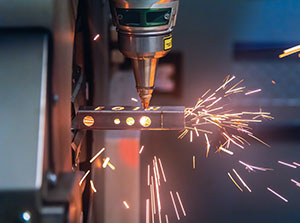
With its tilting laser head, this 3D cutting machine delivers straight and bevel cutting on tubes up to 28 feet long and 27 lbs/ft heft with guaranteed precision and fast turnaround and no order minimums from 1 to 1000+ pieces.

 (800) 892-2981
  [email protected]
A Division of
Liebovich Bros., Inc.
A Subsidiary of
Reliance, Inc.
Family of Locations

© 2026 Liebovich Steel & Aluminum Company
Privacy Policy Terms of Use Terms of Sale Terms of Purchase
Site designed and developed by Blair Inc.